

When someone you love gets arrested for murder, your world flips upside down. That reaction makes sense. This is one of the worst situations any family can face. But panic won’t help your loved one. Knowledge will.
You need a clear picture of what comes next. The criminal justice system moves fast, and it doesn’t wait for anyone to catch their breath. Working with an experienced Atlanta murder defense lawyer gives your family a fighting chance and someone who knows exactly how these cases unfold from day one.
The Arrest and First Court Appearance
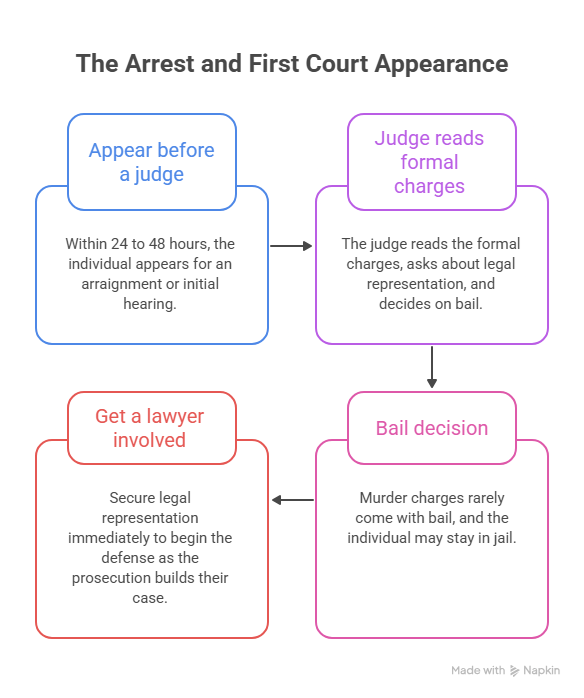
Within 24 to 48 hours, they’ll appear before a judge for what’s called an arraignment or initial hearing. This isn’t the trial. It’s where the judge reads the formal charges, asks if they have a lawyer, and decides whether to set bail.
Murder charges rarely come with bail, especially in the early stages. Don’t be surprised if your family member stays in jail while the case moves forward. That doesn’t mean they’re guilty. Judges play it safe until both sides present evidence.
Your job here is simple: get a lawyer involved immediately. The prosecution starts building their case the second the arrest happens. Your loved one’s defense should start just as fast.
How Murder Cases Move Through the System
A murder case doesn’t go straight to trial. It moves through several stages, each one giving the defense a chance to challenge the prosecution’s evidence.
After the initial hearing comes the preliminary hearing or grand jury proceeding. The prosecutor must show enough evidence to justify moving forward. A judge makes that call after hearing testimony from witnesses. In some cases, a grand jury chooses what happens next.
Next comes the pretrial phase. Through discovery, both sides exchange evidence. The lawyer will review police reports, forensic test results, testimonies, and other materials the prosecution has access too, as well. They’ll also file motions to suppress evidence if it was collected illegally or if procedures weren’t followed.
Pretrial hearings can take many months. Murder cases are complex. They involve autopsies, DNA testing, ballistics reports, and often multiple witnesses. Rushing through this phase hurts the defense. Good lawyers take their time to find weaknesses in the prosecution’s case.
If the case doesn’t get dismissed during pretrial, it moves to trial. If the verdict is guilty, a separate sentencing hearing determines the punishment. If not guilty, your loved one walks free.
What Evidence Looks Like in a Murder Case
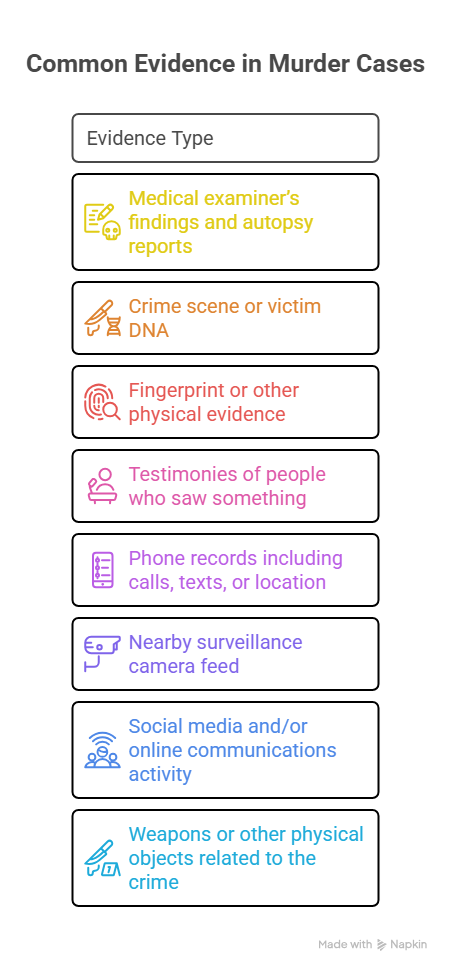
Murder prosecutions rely on different types of evidence (forensic science, witness testimony, digital records).
Common evidence is as follows:
– Medical examiner’s findings and autopsy reports
– Crime scene or victim DNA
– Fingerprint or other physical evidence
– Testimonies of people who saw something
– Phone records including calls, texts, or location
– Nearby surveillance camera feed
– Social media and/or online communications activity
-Weapons or other physical objects related to the crime
How Long Does It Take?
Murder cases often take a year or more from arrest to trial. Sometimes two or three years if the evidence is complicated or if there are multiple defendants.
Delays happen for lots of reasons. The defense needs time to review evidence. Lawyers file motions. Judges have crowded dockets. None of this feels fair when you’re waiting in limbo, but it’s how the system works.
Picking the Right Lawyer
You need someone who does this for a living, not a general practice lawyer who mostly does DUIs or petty theft.
A good lawyer has years of experience with serious felony cases (especially homicide), a track record of trials, and they communicate well. They can translate legal jargon into plain English and are available to do so constantly, because murder cases require attention.
Ask questions in your first meeting. How many murder cases have you handled? What were the outcomes? Will you be the one in court, or will someone else take over? How do you charge, and what does that cover?
If a lawyer seems evasive, distracted, or more interested in your payment than your questions, keep looking. This is too important to gamble on the wrong person.
Emotional and Financial Reality
Murder cases drain families on every level. Emotionally, you’re living in uncertainty for months or years. Financially, defense costs add up fast. Lawyers charge thousands, sometimes hundreds of thousands of dollars for serious felony cases. Experts, investigators, and testing cost extra.
Some families qualify for public defenders. That’s a court-appointed lawyer paid by the state. They can be good, but they’re often overloaded with cases. If you can afford a private attorney, you’ll usually get more time and attention.
Take care of yourself, too. You can’t support your loved one if you’re running on empty. Eat, sleep, talk to someone you trust. Consider counseling if the stress gets overwhelming.
The Bottom Line
A murder charge can change everything. But people get acquitted. Cases get dismissed. Charges get reduced. None of that happens by accident. It happens when families stay informed, work with the right lawyer, and avoid mistakes that could sink the defense.
You can’t control what the prosecution does. You can control how you respond. Get a lawyer fast. Keep your head down. Stay out of trouble. Support your loved one without crossing legal lines.